
News Single
Focus On Connecting And Cooling
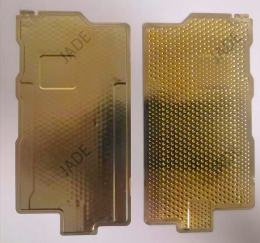
Vapor Chamber
Vapor Chamber
A Vapor Chamber is a two-dimensional, planar phase-change heat-spreading device. Its interior is a vacuum-sealed cavity in which the working fluid repeatedly evaporates and condenses, spreading heat rapidly across the surface. Compared with heat pipes, it can efficiently flatten hot spots caused by single-point, high heat-flux density, and is widely used in high-power cooling applications such as AI computing, power semiconductors, and communications.
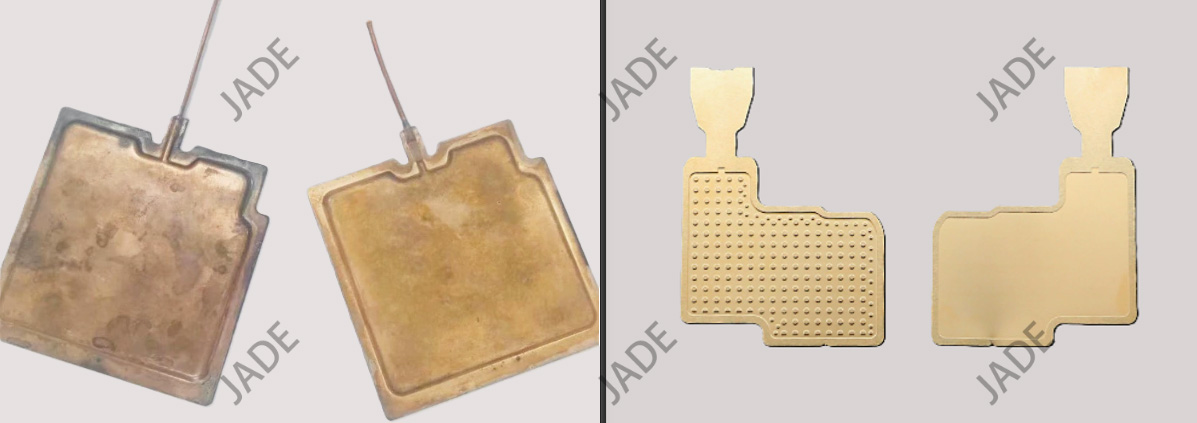
We customize Vapor Chambers of every kind, starting from 0.4 mm in thickness, supporting flat, stepped, grooved, and irregular-profile structures. Capillary wick options include sintered copper powder and composite copper mesh; surface finishes include nickel plating and blackening; studs and locating posts can be pre-installed. We can supply standalone VCs, or integrate fins or water-cooling structures into hybrid cooling modules. Coverage spans sample prototyping through volume production, with helium leak testing, thermal performance testing, and high- / low-temperature vibration reliability testing.
I. Core Performance Advantages
1. Extremely High Equivalent Thermal Conductivity
Equivalent thermal conductivity reaches 5000 W/m·K or more, far above pure copper (about 401 W/m·K).
2. Two-Dimensional Surface Temperature Equalization
Even with multiple heat sources, temperature differences are flattened quickly, delivering about 20% better cooling than a same-size heat pipe module.
3. Thin, Light, and Customizable
Ultra-thin versions are available, with a minimum thickness as low as 0.4 mm.
4. Long-Term Stability and Service Life
Sealed-weld construction with chemically compatible working fluid delivers long-term stable operation provided no leakage occurs.
II. Complete Technical Specifications and Standard Parameters
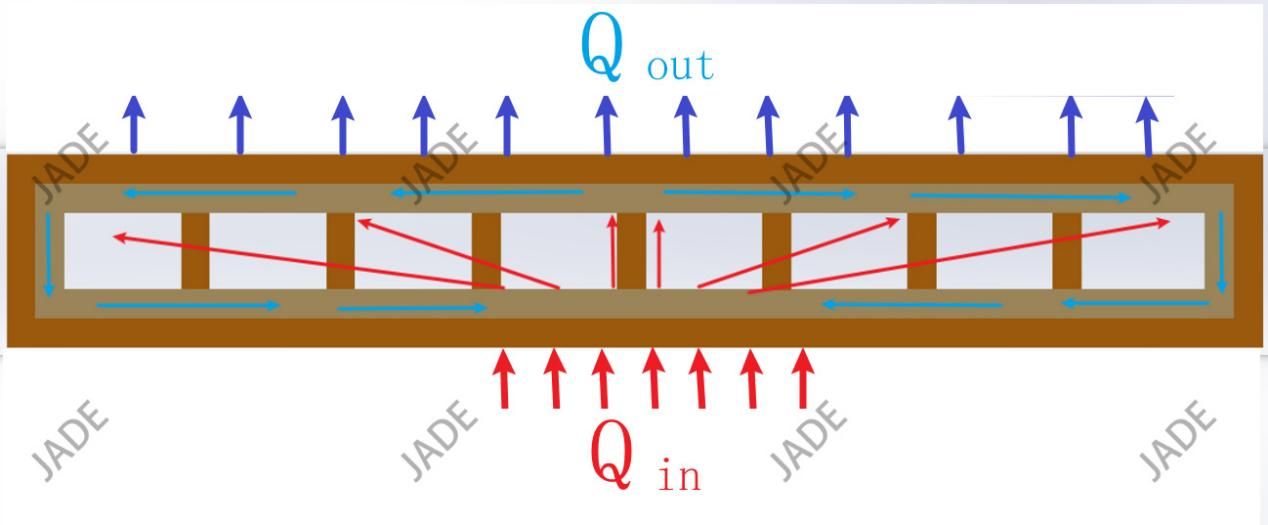
Shell material: C1100 pure copper
Capillary wick: sintered copper powder, composite copper mesh
Working fluid: deionized water
Thickness range: 0.4 mm-10 mm; length and width customized to drawing
Operating temperature range: standard 40 °C-120 °C; high- and low-temperature versions available on request
Welding methods: vacuum brazing, laser sealing weld, diffusion welding
Thermal resistance ≤ 0.15 °C/W
Pressure rating ≥ 1.5× working pressure
III. Full Production Process
1. Raw material cutting: pure copper base plate, copper powder / copper mesh, and support posts are cut to rough dimensions;
2. Capillary wick forming: sintering to produce the internal capillary core;
3. Shell CNC machining: cavity forming, step / clearance pocket machining, and deburring;
4. Cleaning and degreasing: acid-alkali cleaning plus ultrasonic cleaning to remove oils and metal dust;
5. Stack assembly: upper and lower shells, capillary core, and support posts located and assembled;
6. Sealing weld: laser welding or vacuum brazing seals the edges, with the filling port left open;
7. Vacuum evacuation and filling: the cavity is degassed under high vacuum, then the working fluid is metered in precisely;
8. Port sealing: cold-press sealing plus a secondary weld for permanent closure;
9. Helium leak test: 100% airtightness testing of every unit; micro-leaking parts are rejected;
10. Bake aging: high-temperature aging stabilizes the internal working fluid and exposes potential leaks early;
11. Thermal performance testing: sampling checks of thermal resistance and temperature-equalization performance to verify cooling capability;
12. Surface treatment: nickel plating / blackening;
13. Visual inspection: 100% dimensional and cosmetic inspection;
14. Packing and shipment: vacuum, moisture-proof packaging.
IV. Applicable Industries and End Applications
1. Smartphones and Laptops
Cooling for AI phones, flagship models, foldable-screen phones, thin-and-light laptops, and gaming laptops;
2. High-Performance Graphics Cards
High-power industrial control motherboards, inverter main control modules, laser driver power supplies;
3. Automotive Electronics
In-vehicle computing platforms, autonomous driving domain controllers, power-battery temperature equalization;
4. High-End Communications Equipment
5G high-power base station units, high-density telecom power modules, medical equipment.
V. Product Compliance Certifications
1. Management System Certification
1) ISO 9001:2015 quality management system certification;
2) ISO 14001 environmental management system.
2. Environmental Material Certification
1) RoHS 2.0 hazardous substance testing (lead, cadmium, mercury, hexavalent chromium, and phthalates all within limits);
2) REACH SVHC compliance - no prohibited chemicals.
3. Third-Party Performance Testing
1) Airtightness leak testing;
2) Thermal resistance and temperature-equalization testing.
VI. Prototyping & Mass Production Delivery
1. Custom irregular VC profiles, custom surface treatments, and pre-installed studs / locating posts are all supported;
2. Prototyping: customer drawing development supported, with optional thermal simulation review; sample lead time 7-20 days;
3. Small-batch pilot production: SOP and tooling / fixtures locked down, initial reliability screening completed;
4. Mass production: stable volume delivery with lot-based test reports included with each shipment.
Q1: What is the difference between a Vapor Chamber and a heat pipe?
A: A heat pipe conducts heat one-dimensionally along the axis of the tube. A VC spreads heat two-dimensionally across a plane, so a single hot spot diffuses over the entire surface. VCs suit single-point high heat flux, multiple heat sources, and space-constrained applications.
Q2: Can a VC be water-cooled directly?
A: A VC is a heat-conducting / spreading component, not a heat-rejecting one. It can be paired with a cold plate or radiator: the VC spreads the chip heat across its surface, and the water-cooling loop then carries the heat away.
Q3: Does mounting orientation affect performance?
A: Sintered capillary structures are essentially gravity-insensitive under normal conditions and work in any orientation. With very large or very thin VCs, performance drops slightly when inverted; this can be evaluated at the design stage.
Q4: What surface finishes are available for a VC?
A: Nickel plating, gold plating, or blackening - each improves oxidation and corrosion resistance and suits different assembly and welding processes.
Q5: Can a VC fail by dry-out?
A: Exceeding the design heat-load limit or operating outside the specified temperature range causes dry-out, and performance degrades rapidly. Use thermal simulation early in the design to set the power boundary and avoid out-of-spec use.
Q6: Why are ultra-thin VCs hard to make? What are the core challenges?
A: The vapor channel needs to be at least 0.1 mm tall for the working fluid to flow freely, and the weld seam must be held within 0.2 mm - sealing the vacuum without deforming the cavity. When the effective capillary wick thickness drops below 0.15 mm, capillary pressure falls sharply, the liquid return rate slows, and the evaporator end easily “dries out.”
Q7: Why is pure-copper VC being gradually replaced by stainless-steel and titanium VCs?
A: With the push toward ever-thinner designs, a pure-copper shell has little performance left to give. Stainless-steel VC solutions deliver high structural strength and excellent cooling efficiency while significantly cutting weight; pure-titanium VC solutions are tailored for foldable screens and ultra-high-end models, where titanium enables extreme lightness and thinness.


 Send Email
LiveChatclose